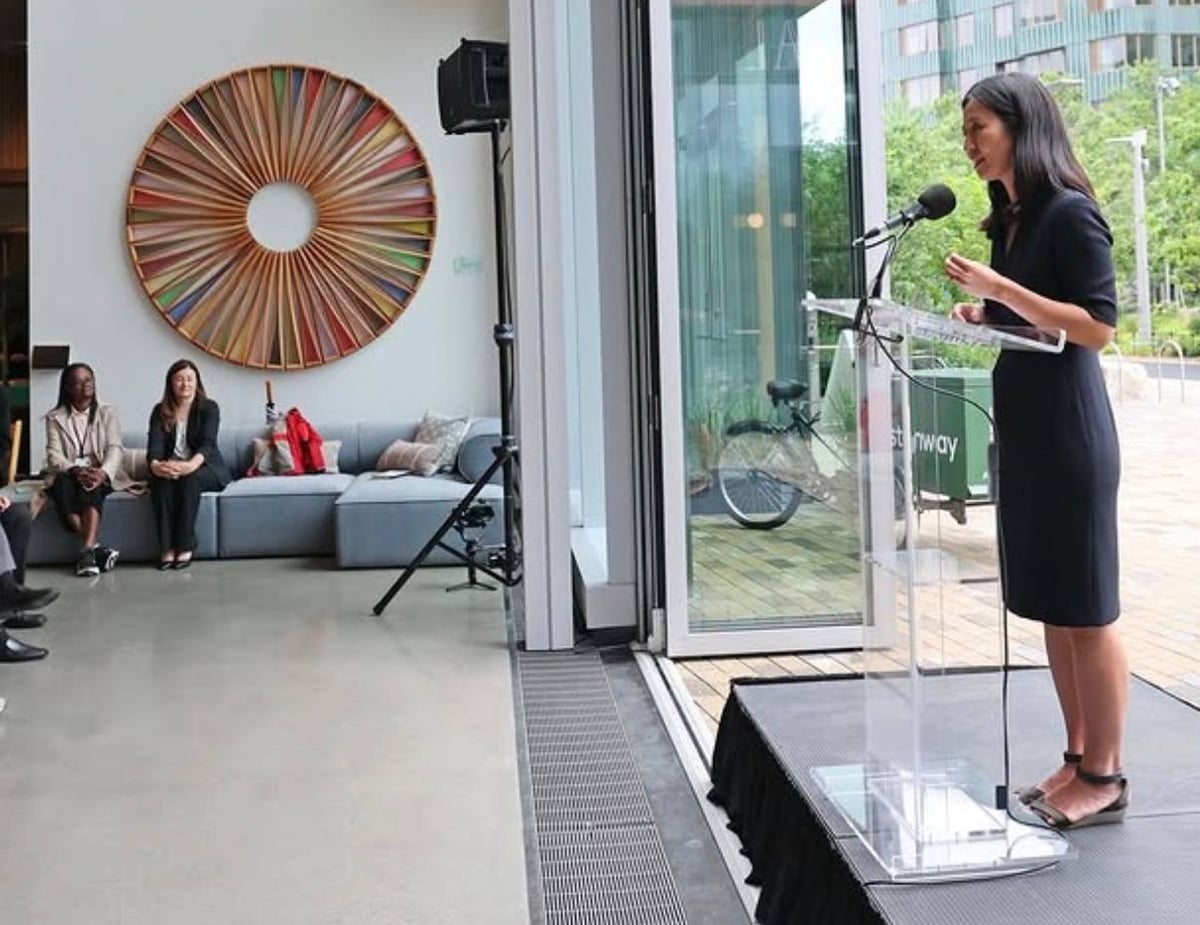
BOSTON — Mayor Michelle Wu took to social media Tuesday to celebrate the grand opening of the Enterprise Research Campus, Harvard's new $1 billion mixed-use development on Allston land that the university has been planning for nearly a decade.
What Wu pitched as a milestone in "economic inclusion and opportunity" includes a $30 million equity pool that bars white investors from participating, leasing requirements that reserve at least 25% of retail space for businesses owned by women and people of color, and procurement set-asides routing more than 15% of total construction costs — and more than 30% of pre-construction costs — to minority- and women-led firms.
Three years after the Supreme Court ruled that Harvard's race-conscious admissions policies were unconstitutional, the university and its development partner are openly running a race-restricted investment program — with the mayor's full public endorsement.
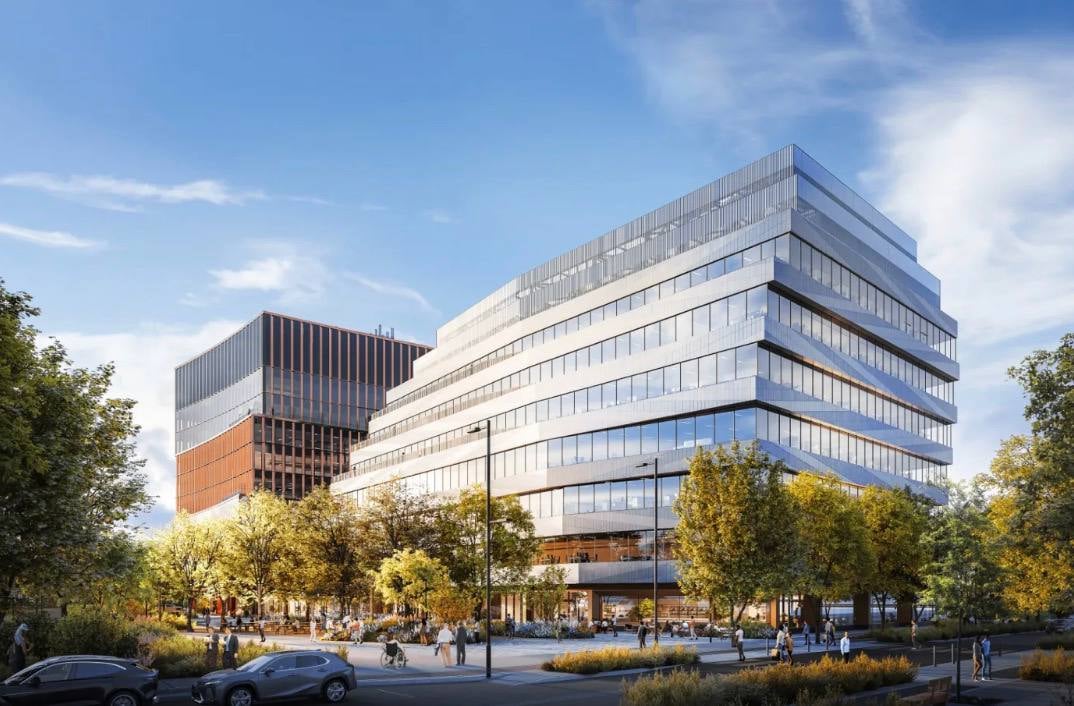
A rendering of Harvard's Enterprise Research Campus development in Allston. Photo: Enterprise Research Campus.
What Wu actually celebrated
"To support economic inclusion and opportunity, Tishman Speyer set up a landmark $30 million equity pool for investors of color, and is leasing at least a quarter of the retail space to businesses owned by women and people of color," Wu wrote in her Instagram post Tuesday. "Every detail of this campus is a reminder that the future is about people — and building spaces where they can work, play, and call home."
When Harvard awarded Tishman Speyer the rights to develop the first phase of the Enterprise Research Campus in December 2019, the university included an unusual condition: at least 5% of project equity had to come from "people of color."
Tishman Speyer's own disclosures, reported by Boston Real Estate Times, confirm what that meant in practice. The developer raised "$30 million-plus of equity from more than 150 Black and Hispanic investors" — what Tishman has touted as the largest inclusionary investor initiative in Boston private development — a pool where eligibility was gated by race. White investors were ineligible.
MASSDAILYNEWS
STAY UPDATED
Get Mass Daily News delivered to your inbox
ADVERTISEMENT · Interested in advertising?
ADVERTISEMENT · Interested in advertising?
The other contracting set-asides are similarly explicit:
- More than 15% of total construction costs and more than 30% of pre-construction costs awarded to "minority- and women-led firms"
- At least 25% of retail leases reserved for businesses owned by women and people of color
Wu's Tuesday post celebrated all of these and framed Tishman's race-restricted $30 million equity pool as a "landmark."
Why this might be illegal
Three federal legal frameworks are actively being used to challenge exactly this kind of program.
42 U.S.C. § 1981. This Reconstruction-era statute bars racial discrimination in private contracts. In American Alliance for Equal Rights v. Fearless Fund — where the 11th Circuit issued a preliminary injunction against a venture-capital fund's grant program for Black women entrepreneurs — the appeals court found the plaintiff likely to succeed on the § 1981 claim. Fearless Fund settled rather than continue defending the program. The Allston equity pool — where participation was gated by race — fits the same legal template.
Title VI and Students for Fair Admissions v. Harvard (2023). Harvard is a federally funded institution. The Supreme Court ruled in SFFA that Harvard's race-conscious admissions program violated both Title VI of the Civil Rights Act and the Equal Protection Clause. The same federal-funding nexus and the same race-conscious gatekeeping logic apply when Harvard imposes a racial set-aside as a contract condition on a private developer.
ADVERTISEMENT · Interested in advertising?
ADVERTISEMENT · Interested in advertising?
State action under Croson and Adarand. Race-conscious government contracting programs require strict scrutiny review under City of Richmond v. J.A. Croson Co. (1989) and Adarand Constructors v. Peña (1995). If the city of Boston, the BPDA, the Mayor's Office of Housing, or any city actor extracted these racial set-asides as a condition of zoning, public land use, or regulatory approval, the program becomes state action and faces strict scrutiny it almost certainly cannot satisfy.
Wu's role
Wu did not impose the original Harvard set-aside requirement — that was in place when Tishman won the development rights in 2019, before Wu became mayor. But the BPDA, under Wu, approved Phase A of the project in July 2022 and her administration publicly highlighted the affordability and set-aside commitments in its own press release at the time. Tuesday's Instagram post is the most recent and most prominent endorsement.
"When our administration took office in 2021, we knew the opportunity this space represented for Allston, Harvard, and Boston," Wu wrote Tuesday. "So we brought together neighbors, elected officials, labor leaders, Harvard, and Tishman Speyer to reach an agreement worthy of the aspirations of our city."
The mayor's post does not address SFFA, § 1981, or the Fearless Fund precedent.
What happens next
Edward Blum's American Alliance for Equal Rights and the Pacific Legal Foundation have spent the post-SFFA years actively scouting race-restricted business programs to challenge in court. The Enterprise Research Campus — with its explicit racial-eligibility criteria for investor participation, contracting, and leasing, on a federally funded university's land, with city approvals behind it — fits the profile of a plaintiff target almost exactly.
Loading Comments